Meme coin trading versus holding
You can order the same kind of articles for your own video to boost it on YouTube and Google. Just message the Telegram bot @sat_sit_bot. It writes articles around your video, embeds the video and publishes them on popular niche websites (no ads). Try it free: 50 articles on us.
· based on the channel insentos
Meme coin trading is not a single skill but a spectrum: at one end sits fast scalping of fresh Solana launches, at the other long-shot holding of a community token for weeks. The right choice depends on how much time you can watch charts, how you handle drawdowns and whether you have a written exit plan. For anyone starting out, the practical answer is to treat meme coins as a speculative allocation with hard caps, and to learn execution mechanics on a platform like fomo.family before risking real size.
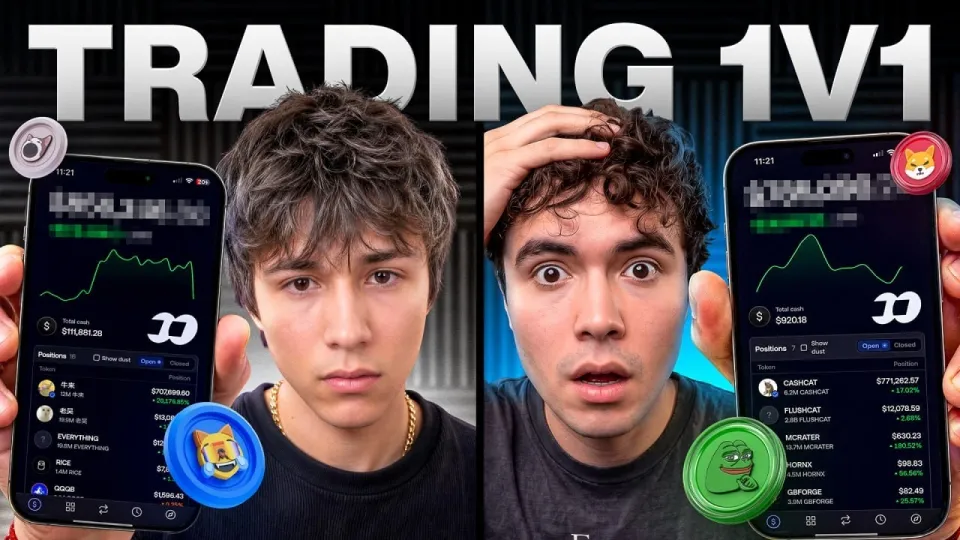
The insentos video "I Challenged A Pro Memecoin Trader (Who Won?)" is a useful case study because it shows two traders on a live call, narrating decisions in real time rather than posting hindsight screenshots. The guest keeps explaining his thought process even while managing a position, which is exactly the habit that separates a process from a gamble.
What a meme coin actually is and why the asset class behaves differently
A meme coin is a token whose value rests on attention, community and liquidity rather than revenue or protocol usage. That single fact explains most of its behaviour: prices are reflexive, moving on social signals and order flow, and the supply side is often concentrated in a handful of wallets. There is no earnings floor, so a token can fall 90% and still be structurally "expensive" if liquidity has drained.
Key structural traits to check before any trade:
- Liquidity depth — how much can you sell without moving price 10-20%.
- Holder distribution — top wallets holding a large share can exit into your bid.
- Contract permissions — mint authority, freeze authority and tax functions.
- Age and volume pattern — a token that survived several weeks has a different risk profile from a launch minutes old.
- Venue — Solana memecoins trade on aggregators and launchpads, and execution speed matters more than on centralized exchanges.
How the live challenge format exposes real meme coin trading decisions
Live trading on a call is the closest thing to a stress test, because the trader cannot edit the outcome. In the insentos challenge the format runs roughly 40 minutes, with the bulk of it spent trading and giving advice, then a shorter segment trading with a guest named Grand. What stands out is the routine: check the chart, define where the idea is wrong, size accordingly, then execute.
A few mechanics worth copying from that setup:
- Use a dedicated terminal such as Axiom (axiom.trade) with hotkeys and pre-set buy amounts, so execution takes seconds.
- Say the thesis out loud before entering: what you are buying, why now, and what invalidates it.
- Keep a scratchpad of entries and exits; reviewing your own log beats rewatching someone else's wins.
Scalping versus holding: a side-by-side comparison
Scalping and holding are different jobs with different failure modes. Scalping fresh launches demands screen time, fast reflexes and strict stop discipline; the edge is small and repeated, and one oversized loss can erase ten good trades. Holding a community token demands patience and tolerance for violent drawdowns; the edge is asymmetric upside, but the base rate of a token going to zero is high.
| Dimension | Scalping | Holding |
|---|---|---|
| Time commitment | Minutes to hours daily | Occasional checks |
| Typical edge | Order flow and speed | Narrative and community |
| Main risk | Slippage and rugs | Liquidity drain over weeks |
| Position sizing | Small, many attempts | Small, few attempts |
| Skill to build first | Execution and exits | Research and patience |
For most people the honest answer is a hybrid: a small scalping budget for learning execution, and an even smaller long-shot budget for holding, with the two never mixed in the same mental account.
Risk rules that keep a meme coin portfolio alive
Risk management is the only part of meme coin trading that compounds reliably. Set the rules before the market opens, because during a live candle you will rationalise anything. A workable baseline: risk no more than 1-2% of your trading stack per idea, cap total meme coin exposure at a share of net worth you can lose entirely, and never add to a position that has broken its invalidation level.
Practical checklist:
- Define the invalidation price before entry and place the exit order at the same time as the buy.
- Take partial profit at the first target; leave a runner only with house money.
- Avoid tokens where top ten wallets hold an outsized share of supply.
- Skip entries when liquidity is thin enough that your own exit would crater the price.
- Log every trade with size, thesis and result, and review weekly.
Common beginner questions about meme coin trading answered
Beginners usually ask the same handful of things, and the audience reaction to the insentos challenge makes that clear: people want to know whether the pros actually make money, whether calls can be copied, and how to get into communities that are often gated. The short answers are that results vary widely, copying calls without a plan transfers someone else's risk to your account, and most paid groups are unnecessary early on.
Three habits that answer most of these doubts at once:
- Paper trade or use tiny size until your log shows a positive expectancy over at least 50 trades.
- Judge a trader by how they handle a losing position, not by their best screenshot.
- Treat every challenge format, including 50-to-1000 runs, as entertainment plus education, not as a business plan.
Useful links
- fomo.family registration and bonus
- Axiom trading terminal
- insentos on X
- insentos on Instagram
- insentos on TikTok
Bottom line
Meme coin trading rewards process over prediction, and the insentos challenge shows why: the guest's edge comes from narrating a thesis, sizing small and cutting fast, not from a secret indicator. Pick the style that matches your available time, cap your exposure, and build an execution routine on tools you actually know. If you want to follow the format further, the insentos channel is the author of this breakdown and publishes more live trading sessions. Start with a small account via fomo.family and treat every trade as a data point.
Key takeaways
- Memecoins are high-volatility tokens with no cash flow, so profit comes from timing and liquidity, not fundamentals.
- The insentos challenge video pairs the host with a guest trader on a live call, using Axiom and fomo.family as the trading stack.
- Scalping memecoins requires pre-set invalidation levels, position sizing and fast execution; holding demands tolerance for 80-90% drawdowns.
- Most beginners lose because they copy calls without a plan, chase green candles and average down on dead liquidity.
- A 50-to-1000 style challenge is a risk-sizing exercise, not a strategy proof: one lucky run does not validate an edge.
Source: I Challenged A Pro Memecoin Trader (Who Won?) · Markdown version
Questions & answers
Can you actually make money trading meme coins?
Yes, but the distribution is wide: a small number of disciplined traders compound small edges, while most participants lose because of oversized positions and late entries. Profit comes from execution and risk control rather than from picking the right token.
Is it better to scalp Solana memecoins or hold one long term?
Scalping suits people who can watch charts and exit quickly; holding suits those who accept 80-90% drawdowns for a shot at asymmetric upside. Many traders split a small budget between both and never mix the two accounts.
Why do live trading challenges often end in a loss?
Live formats add time pressure and audience pressure, and meme coin outcomes are noisy, so a single session says little about skill. Judge a trader by their process and risk rules over many trades, not by one result.
Do I need paid groups or a special terminal to start?
No. A basic aggregator, a wallet and a written plan are enough to begin with tiny size. Terminals like Axiom mainly speed up execution, and communities are useful for learning, not for outsourced decisions.